Quick Answer: 2026-2027 Florida Housing Market Trends
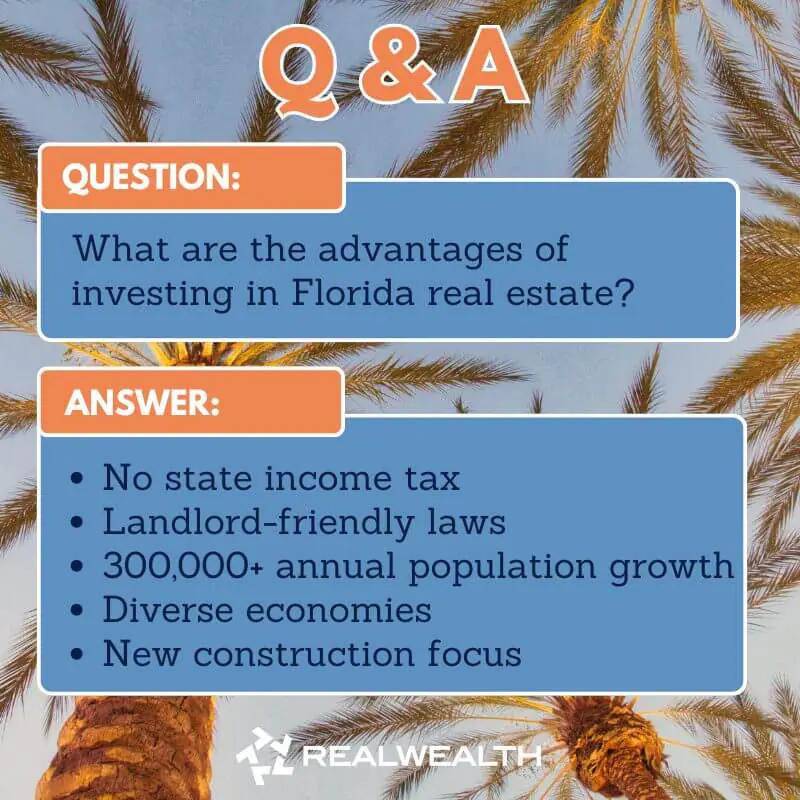
What is happening with the Florida housing market? We researched the key factors shaping Florida’s real estate market and the trends investors need to know for 2026 and 2027. Here’s the lowdown on the Sunshine State:
- Home prices stabilizing with regional variation. Statewide, Florida home prices are moderating to a sustainable pace. Cape Coral and Fort Myers are experiencing significant corrections in 2026 but are expected to stabilize in 2027. Jacksonville is seeing modest declines followed by stabilization. Growing metros like Ocala, Port St. Lucie, and Jacksonville continue attracting buyers seeking affordability compared to South Florida.
- Shift to a buyer-friendly market statewide. Florida’s housing market is transitioning toward buyer-friendly conditions, with inventory rising to approximately 5.2 months of supply for single-family homes and 9.7 months for condos and townhouses. Homes are spending 56 to 83 days on the market. While top metros like Miami, Fort Lauderdale, and West Palm Beach offer more negotiation room, high-demand areas like Cape Coral-Fort Myers remain more competitive. Buyers have increased leverage across most markets.
- Rental market stabilizing after volatility. Statewide rent growth is projected at 1-2% for 2026-2027, marking a return to pre-pandemic norms. Jacksonville, Miami, Orlando, Tampa, Cape Coral, and North Port are experiencing rent declines as oversupply is absorbed. However, areas like Westlake, Eagle Lake, and Davenport are seeing growth. Vacancy rates have risen significantly statewide, creating a more tenant-friendly market. As multifamily construction slows sharply in 2026-2027, markets are expected to stabilize and tighten by late 2027.
Below, you’ll find more insights on population growth, new construction, and economic factors that might impact the pricing and demand for investing in Florida real estate. We’ve also analyzed trends in four of Florida’s major markets: Cape Coral, Fort Myers, Jacksonville, and Ocala.
Whether you’re a seasoned investor or just starting, these Florida housing market predictions will help you make informed decisions about your investments in 2026 and beyond.
The information below is supported by data and statistics from sources such as the U.S. Census Bureau, the Bureau of Economic Analysis (BEA), the Florida Chamber of Commerce, Redfin, Florida Realtors, the NAR, and RealPage.
Florida Housing Market Trends & Factors Influencing Growth
Before we dive into specific markets, let’s review the key factors driving Florida’s housing market.
1. Population growth and migration patterns
Florida remains one of the fastest-growing states in the United States, though growth is moderating from pandemic-era peaks. The state’s population is projected to reach approximately 23.55 million in 2026 and 23.84 million in 2027, with over 300,000 new residents expected annually through 2027. Florida is on track to reach 25 million by 2031.
However, the pace of growth is cooling. Net domestic migration has dropped by over 90% from its 2022 peak, falling to approximately 22,517 new residents in the last year, down from 310,892 in 2022. The daily new resident rate has declined to 838-849 per day in 2026, down from 874 per day in previous years, and is projected to fall further to 789 per day by 2030.

Image Source: Florida Chamber of Commerce
Despite the slowdown, Florida continues to attract residents from high-cost states. New York remains the top source, with over 91,000 to 100,000+ people moving annually, followed by significant migration from New Jersey, California, Illinois, and Georgia. Other major contributors include Pennsylvania, Ohio, and Massachusetts.
International migration remains positive in 2026, with Florida continuing to attract foreign, affluent, and professional residents drawn by low taxes and a business-friendly environment. Miami, Orlando, and Tampa remain high-ranking metro areas for attracting international and domestic migration.
However, outmigration is also occurring. Floridians are primarily moving to Georgia, Texas, North Carolina, Tennessee, and Virginia, driven by searches for lower cost of living, more affordable housing, and concerns about insurance costs and climate risks.
The combination of continued population growth—albeit at a more moderate pace—and strong demand from relocating residents continues to support Florida’s housing market, even as some markets experience price corrections.
2. Employment and economic indicators
Florida’s economy continues to outperform the national average, though at a more moderate pace than pandemic-era growth. Florida’s GDP is forecast to grow by approximately 2.3% to 2.7% in 2026, outpacing the national economy. For 2027, GDP growth is projected to moderate to a more sustainable, pre-pandemic pace with steady, lower growth rates.
Personal income and wage growth remain robust, with average annual wage growth projected at 5.1% or higher, including 5.3% in fiscal year 2026-27. This strong income growth helps support housing demand even as prices remain elevated.
Florida’s job market continues to expand, with job growth projected to remain positive through 2028. While growth is slowing from previous years, Florida continues to outperform the national average. Construction and manufacturing are expected to lead job creation in 2026, driven by infrastructure projects, industrial expansion, and continued population growth.
The unemployment rate is projected to peak around 4.5% in 2026, then decrease to an average of 3.5% in 2027 due to a rebound in hiring in the second half of the year. This relatively low unemployment rate indicates a healthy labor market that supports housing demand.
Tourism remains a major economic driver. Preliminary data shows 143.3 million visitors in 2025, with Florida’s tourism industry projected to reach over 170 million annual visitors by 2029. This sustained tourism activity supports employment in hospitality, retail, and related sectors while driving demand for both residential and short-term rental properties.
These economic indicators are essential for Florida housing market predictions for 2026 and 2027. They show that Florida’s economy continues to grow at a healthy pace, supporting housing demand even as the market transitions to more balanced conditions.
3. Real estate development and construction trends
Florida’s housing market is experiencing a significant shift toward higher inventory and more balanced conditions in 2026. As of January 2026, inventory levels have risen to approximately 5.2 months of supply for single-family homes and 9.7 months for condo and townhouse units. This represents substantial increases from recent years, creating better opportunities for buyers.
Active listings are rising across all housing types. Single-family home inventory has increased significantly from previous years, while condo and townhouse inventory has surged even more dramatically. This increased supply is tipping the scales in favor of buyers after years of intense seller-dominated competition.
As of early 2026, Zillow reported that the median home value in Florida is $370,112. Prices are showing slight year-over-year declines or stabilization, with projections indicating a continued modest correction in 2026 due to increased inventory and market resetting.
Florida’s new construction market in 2026-2027 is shifting toward a more disciplined, slower pace. While demand remains, rising material costs, labor shortages, and mortgage rates around 6.0-6.3% are cooling the rapid growth seen in previous years. New construction activity is finally starting to moderate after the construction boom of 2024-2025, leading to a better balance between supply and demand.
Thanks to the Live Local Act, more affordable housing developments continue popping up across Florida. Developers are receiving tax credits and exemptions to build in exurban communities such as Homestead, Kendall West, Broward, and Lake Worth. This initiative is helping address Florida’s affordable housing shortage.
Florida is also seeing significant infrastructure upgrades. Major projects for 2026-2027 include I-75 capacity improvements, State Road 29 realignment, Poinciana Parkway Connector, Beeline Highway/Turnpike widening, and I-4 corridor upgrades. Transit improvements, such as Tri-Rail and Brightline expansions, continue, with major transit-oriented development (TOD) activity concentrated in South Florida (Miami-Dade, Broward, and Palm Beach counties) and Central Florida.
Price trends vary by area type. Suburban areas, particularly established suburban neighborhoods, maintain high demand and tight inventory, keeping prices stable to slightly increasing. Urban cities like Orlando and Miami continue to attract residents with amenities, though some older condo buildings face price pressure due to higher insurance and maintenance costs, while new, modern builds maintain higher price points. Rural areas experienced the fastest erosion of affordability during the pandemic, with prices rising rapidly and often outpacing income growth.
Based on current trends, Florida’s real estate forecast shows the market continuing to stabilize in 2026-2027 with more balanced conditions, moderate price growth or stabilization, and improved opportunities for buyers compared to the frenzied pandemic-era market.
4. Government policies and regulations affecting real estate
Several significant government policies and regulations are shaping Florida’s real estate market in 2026-2027.
Commission changes: New rules that went into effect on August 17, 2024, continue to impact the market. Buyers and sellers can independently negotiate commissions, and agents can no longer advertise their commission rates on Multiple Listing Services. While early data showed modest changes, by 2026, increased competition among agents is expected to drive total commission rates below the traditional 5-6% model, with some forecasts suggesting rates could approach 3-4% in certain scenarios. Because sellers are no longer required to cover buyer agent fees, first-time buyers may face higher upfront out-of-pocket costs.
Accessory Dwelling Units (ADUs): By December 1, 2026, municipalities must adopt ordinances allowing ADUs (“granny flats” or backyard cottages) in single-family residential areas “by right,” reducing local zoning hurdles. This opens opportunities for property owners to create additional rental income.
Flood disclosure requirements: Starting October 1, 2025, and continuing through 2026, new Florida laws (CS/CS/SB 948) require sellers and landlords to provide written disclosure of a property’s flood history. Sellers must disclose past claims and damage before executing a contract, while landlords must notify tenants of flood risks before signing leases of one year or longer.
Federal anti-money laundering rules: Starting March 1, 2026, new federal FinCEN reporting rules will require enhanced anti-money-laundering reports for certain all-cash, entity-based residential purchases, which could add complexity to high-end Florida transactions.
Foreign buyer restrictions: Florida’s Senate Bill 264 (SB 264), effective since July 1, 2023, continues to strictly limit real estate purchases by “foreign principals” from seven countries of concern—China, Russia, Iran, North Korea, Cuba, Venezuela, and Syria. The law remains in effect, with federal courts upholding its restrictions on the purchase of agricultural land or property near military and critical infrastructure.
Rural development: Senate Bill 354/House Bill 299 allows owners of at least 10,000 acres to bypass some local zoning regulations if they create affordable housing, potentially opening new development opportunities.
HOA reform: Florida is considering major HOA reform in 2026, headlined by HB 657, which would allow homeowners to dissolve their associations with a two-thirds vote. If passed, these rules could take effect July 1, 2026, aiming to simplify dissolution, improve transparency, and create a specialized court program for disputes.
Insurance rate relief: In a major development for Florida homeowners, Governor Ron DeSantis announced significant statewide insurance rate relief. Citizens Property Insurance policyholders across the state will see meaningful premium reductions beginning in Spring 2026 at policy renewal. Under the approved rates, the vast majority of Citizens policyholders statewide will receive a premium decrease, with an average statewide reduction of 8.7%. Over 330,000 policyholders across all 67 counties will see rate decreases, and more than 150,000 policyholders will receive reductions of 10% or greater.
Cape Coral, Florida, Housing Market Predictions 2026
Below, we’ll examine the Cape Coral, Florida, housing market and key real estate market trends for this area. Below, we’ll examine the Cape Coral, Florida, housing market and key real estate market trends for this area of the Sunshine State.

Overview of the Cape Coral metro area
Bordered by the Caloosahatchee River to its east and south and Matlacha Pass to its west, the Cape Coral Peninsula features over 400 miles of navigable waterways—more than any other city worldwide.
The Cape Coral area is known for its coastal beauty, outdoor recreational opportunities, and relaxed lifestyle. Its charming downtown areas, beautiful beaches, and proximity to islands and nature preserves, such as Sanibel and Captiva Islands, make it a popular destination for outdoor enthusiasts and seasonal residents. The area has numerous parks, golf courses, preserves, and water sports activities.
Cape Coral’s population growth
- The Cape Coral-Fort Myers metro area had a population of approximately 905,464 in 2025.
- The region experienced 38.76% population growth between 2010 and 2024, with a 14-year growth rate of 2.55%.
- Cape Coral remains one of the fastest-growing municipalities in Florida, with over 25,000 new residents annually.
- The broader Cape Coral-Fort Myers MSA is projected to exceed 1 million residents by 2050.
- Growth is driven by domestic migration, primarily from the Midwest and Northeast, though migration has cooled from the 3.5% surge in 2022 to 0.5% in 2024.
Cape Coral’s job market
- The Cape Coral metro area added 2,000 jobs between August 2024 and August 2025, with a job growth rate of 0.64%.
- The job market is expected to see moderate, cooling growth through 2026 and 2027 as the area transitions toward pre-pandemic, more sustainable growth rates.
- Major developments driving employment include the $700 million Cape Coral Grove mixed-use project and the Seven Islands development.
- The $284.6 million North 3 Utility Expansion supports infrastructure growth.
- Established employers include TGM, Mercola.com, Gulf Coast Village, and city government operations.
- The leisure and hospitality sector is one of the metro area’s most significant contributors to the economy.
- Unemployment in Florida remains historically low. As of Dec 2025, Cape Coral’s rate was 4.9%
Cape Coral’s housing market
- The median home price is $355,842, which is 0.80% below the national average, making Cape Coral attractive for affordability.
- Home values have appreciated by 76.98% over the past 10 years, with an average annual appreciation of 5.87%, demonstrating sustained long-term value growth.
- As of February 2026, inventory ranges between 6.4 and 9.2 months of supply, maintaining buyer’s market conditions.
- Homes are taking a median of 57 days to reach pending status as the market transitions to a more balanced environment.
- The median rent is $1,906, and rents are expected to stabilize in 2026.
Cape Coral Real Estate Trends & Predictions for 2026
Cape Coral Property Price Trends & Predictions
1. price decline followed by stabilization
Home prices in Cape Coral are forecast to decline by 10.2% in 2026. This correction follows rapid pandemic-era appreciation and is driven by expanding inventory and shifting buyer demand.
Inventory ranges between 6.4 and 9.2 months of supply, maintaining buyer’s market conditions. Homes take a median of 66 days on market. Buyers have leverage with softening prices, increased selection, and frequent seller concessions. Looking to 2027, modest growth of 1-2% is expected as the region absorbs inventory and stabilizes.
The median home price sits at $355,842, 0.80% below the national average. Despite the near-term decline, the market has demonstrated strong long-term fundamentals with 76.98% appreciation over the past decade and 5.87% yearly growth. The 2026 correction represents market rebalancing after unsustainable appreciation.
2. Hurricane recovery and insurance costs impacting the market
Hurricane recovery continues influencing Cape Coral’s market in 2026. Insurance costs average $3,631 in Lee County, with projections of $3,700-$4,300 for non-beachfront homes, especially with significant storm seasons. These elevated costs factor heavily into buyer affordability calculations.
Despite challenges, major infrastructure investments and new developments demonstrate long-term confidence: the $700 million Cape Coral Grove project and $284.6 million North 3 Utility Expansion enhance resilience. Mortgage rates are expected to settle in the 6.0-6.3% range. Combined with the 10.2% price decline, these create opportunities for buyers who can manage insurance costs. Sellers must price competitively in this buyer-friendly market.
Cape Coral Rental Rate Trends & Predictions
1. Rent stabilization after a significant decline
After a 9.1% decline in rent between May 2023 and May 2024, Cape Coral’s rental market is stabilizing. Median rent sits at $1,906, reflecting a correction from oversupply, a dramatic reversal from the 34.7% peak growth in April 2022. The worst of the decline appears over as the market absorbs excess inventory.
Rent concessions are shifting from aggressive levels toward a more balanced approach. As multifamily vacancy rates decline through 2026, landlords are gaining pricing power. Properties that relied on heavy concessions are seeing faster leasing velocity, allowing them to reduce or eliminate incentives.
2. Volatile moderating with improved occupancy
Rent volatility is stabilizing throughout 2026 as the market balances. Properties previously dependent on concessions are now seeing faster leasing, allowing landlords to reduce incentives.
Looking to 2027, modest rent growth is expected as the market completes its correction. The extreme swings of previous years should moderate as supply and demand balance. For investors, properties averaging $367,500 with $2,250 in rent offer improved cash-flow prospects as stabilization progresses.
3. Construction pipeline moderating
This construction slowdown helps absorb the oversupply that drove declines in 2024-2025 rents. Once new apartments are occupied and supply moderates, rents should stabilize and potentially increase. Cape Coral’s seasonal “snowbird” market (December-April peak) benefits from infrastructure investments like the $100 million Bimini Square project. The combination of improved occupancy, reduced concessions, and moderating supply creates favorable conditions for rental investors heading into late 2026 and 2027.
Fort Myers, Florida, Housing Market Predictions 2026
Below are our Fort Myers housing market predictions for 2026 based on current trends.

Overview of the Fort Myers metro area
The Fort Myers metro area (Cape Coral-Fort Myers MSA) is located in Southwest Florida. Its key cities include Fort Myers and Cape Coral (both in Lee County). The area is known for its coastal beauty, outdoor recreation, and nature preserves.
Popular attractions include Fort Myers Beach on Estero Island, Sanibel and Captiva Islands, The Great Calusa Blueway, numerous parks, and golf courses. Fishing, boating, and water sports are popular activities here.
Fort Myers’s job growth
- Healthcare, retail trade, and food services drive Fort Myers’ economy.
- Other growing sectors include logistics, distribution, tech, and manufacturing (including 3D printing).
- The Cape Coral-Fort Myers metro area added 2,000 jobs between August 2024 and August 2025, with a job growth rate of 0.64%.
- Major employers and projects driving growth include the Amazon Robotics Fulfillment Center (650,000+ sq ft on State Road 82), Lee Health expansions, and the Kingston Development (7,000-acre master-planned community with 10,000 residential units).
- In December 2025, the unemployment rate was 4.9%.
Fort Myers’s population growth
- The Cape Coral-Fort Myers metro area has a population of approximately 905,464 as of 2025.
- The region experienced 38.76% population growth between 2010 and 2024, with a 14-year growth rate of 2.55%.
- The city of Fort Myers itself has an estimated population of 105,000-108,000 in early 2026, with projections to reach 115,000-117,000 by 2030, driven by ongoing urban development.
- The broader Cape Coral-Fort Myers MSA is projected to exceed 1 million residents by 2050.
- Fort Myers remains a hot spot for relocation, keeping housing demand high despite market corrections.
Fort Myers’s Housing Market
- The median home price is $355,842, which is 0.80% below the national average.
- Home values have appreciated by 76.98% over the past 10 years, with an average annual appreciation of 5.87%, demonstrating sustained long-term value growth.
- As of early 2026, Fort Myers has roughly 7 to 7.7 months of supply available—a buyer-friendly, high-inventory environment.
- Homes are taking an average of 75 days to sell (down from 80 days in January 2025).
- The median rent is $1,906, with current average rental prices around $1,995.
Fort Myers Housing Market Predictions for 2026
Fort Myers Property Price Trends & Predictions
1. price decline followed by stabilization
Home prices in the Cape Coral-Fort Myers metropolitan area are forecast to decline by 10.2% in 2026, among the largest declines expected for any U.S. metro area. This correction follows rapid pandemic-era appreciation and is driven by expanding inventory and shifting buyer demand. Current median prices are approximately $342,000-$350,000, representing about a 9% decline from the prior year.
Fort Myers maintains 7 to 7.7 months of supply, well above the 6-month balanced threshold. In February, Zillow reported the median home price at $311,708. Despite the near-term decline, the market has demonstrated strong long-term fundamentals with 76.98% appreciation over the past decade and 5.87% yearly growth. The 2026 correction represents market rebalancing after unsustainable appreciation. Looking to 2027, modest growth of 1-2% is expected as the region absorbs inventory and stabilizes. Continued population growth and sustained demand are expected to gradually absorb this inventory throughout 2026.
2. Insurance costs impacting buyer demand
Fort Myers home insurance costs continue to severely impact the real estate market in 2026. The average insurance premium in Lee County is approximately $3,631. For non-beachfront homes, 2026 projections range from $3,700 to over $4,300, especially with significant storm seasons. These elevated costs factor heavily into buyers’ affordability calculations and directly impact purchase decisions.
Despite these challenges, Fort Myers is experiencing massive economic growth. A $6 billion downtown revitalization is underway, including redevelopment of the Fort Myers Yacht Basin with expanded marina facilities, waterfront retail, and public access improvements. The Southwest Florida International Airport (RSW) is expanding with a new Concourse E, adding 14 gates and increasing capacity by 50%. Completion is expected in December 2027.
Fort Myers Rental Rate Trends & Predictions
1. Highly renter-friendly market with significant concessions
As of early 2026, Fort Myers is experiencing a highly renter-friendly market, characterized by significant concessions and downward pressure on rents. This shift is driven by high vacancy rates and an oversupply of new multifamily units. The median rent is $1,906, with the current average rental price around $1,994.
Rent concessions are widespread as property managers compete for tenants. As of late 2025/early 2026, concessions often range from 5 to 6 weeks of free rent, with some reaching 7 weeks in the area. Vacancy rates have improved from the 13.5% peak in mid-2024 to approximately 8.8% in early 2026, though this remains elevated compared to healthy market levels.
The Cape Coral-Fort Myers area is projected to see rent growth of 3.8% in 2026, dipping slightly to 2.9% in 2027 as new supply is absorbed. Despite the oversupply challenges, Fort Myers remains attractive for relocation, keeping underlying demand strong.
2. Construction pipeline moderating after peak deliveries
Fort Myers enters 2026 with a 25-year-high vacancy rate, driven by approximately 6,700 units under construction as of mid-2024. However, the market is transitioning from a “softening” phase to stabilization as this new inventory is absorbed.
After peak deliveries in 2024-2025, new construction is expected to contract or moderate by summer 2026, helping stabilize the market. Despite a slowdown in new starts due to capital market headwinds, projects already in the pipeline are being completed. New developments include The Arwyn (230 units, announced for 2026), Helm’s Bay Landing (102-unit affordable housing project in nearby Iona/Sanibel area), and a high-rise apartment in the Fort Myers River District.
While 2026 presents a strong buyer-centric rental market, continued population growth and sustained demand are expected to gradually absorb the oversupply throughout the year. Fort Myers is poised for a rebound in rental demand, placing it among the top emerging markets for 2027.
Jacksonville, Florida, Housing Market Predictions 2026 & 2027
Below, you’ll find our Jacksonville, Florida, housing market forecast for 2026, based on key trends in the area’s real estate market.

Overview of the Jacksonville metro area
Known as the First Coast, Metro Jacksonville, or Northeast Florida, Jacksonville ranked as the 10th most populous city on Census.gov (2024). With a population of approximately 1.83 million in 2026, it is Florida’s most populous city. The region continues to attract over 100 new residents daily.
Jacksonville’s economy
- Jacksonville has a well-diversified economy, with finance, healthcare, logistics, advanced manufacturing, fintech, and aerospace creating jobs in the area.
- The city is the central economic hub of Northeast Florida, home to several Fortune 500 companies and a thriving entrepreneurial ecosystem.
- JAXPORT, one of the busiest ports on the East Coast, supports Florida’s economy with $31 billion in annual economic output from international and domestic trade. Major expansions are underway to increase container capacity.
- The region is projected to grow 11% between 2023 and 2028, driven by infrastructure investment and sector diversification.
Jacksonville’s job growth
- Jacksonville is positioned for sustained economic and job growth throughout 2026 and 2027.
- Key growth sectors include logistics, advanced manufacturing (including the HOLON autonomous vehicle plant), fintech, healthcare, aviation, and aerospace operations at Cecil Airport.
- Major infrastructure projects, including expansions at JAXPORT and Jacksonville International Airport, continue to attract capital investment and job creation.
- The unemployment rate is projected to be around 4.5% for 2026-2027, reflecting a moderately cooling but stable labor market.
Jacksonville’s population growth
- The Jacksonville metro area continues experiencing consistent population growth, with the 2026 metro population at approximately 1.7 million.
- The region experienced 30.52% population growth between 2010 and 2024, adding hundreds of thousands of new residents.
- Over 100 new residents arrive daily, primarily through domestic migration from higher-cost urban centers seeking affordability and economic opportunity.
- Growth is concentrated in suburban hubs like Northside, Bartram Park, and St. Johns, as well as in urban revitalization areas like Downtown, Riverside/Avondale, and San Marco.
Jacksonville’s housing market
- Jacksonville’s real estate market has shifted to a buyer-friendly market in 2026, with approximately 6 months of housing inventory.
- In January 2026, the median home price was $282,000, down 4.4% compared to 2025, making Jacksonville more affordable than higher-priced Florida metros.
- Homes are taking an average of 47 days to sell and typically closing at around 96% of their list price.
- Home values have appreciated by 108.34% over the past 10 years, with an average annual appreciation of 7.62%, demonstrating sustained long-term value growth.
Jacksonville market predictions for 2026 & beyond
Jacksonville Property Price Trends & Predictions
1. Market rebalancing with modest price decline
The Northeast Florida Association of Realtors® reports that Jacksonville’s real estate market is shifting to a more balanced market, with six months of inventory. As of early 2026, homes were taking 47 days to sell and closing at 96% of the list price. The re-balancing of the market gives buyers more negotiating leverage, while sellers face longer marketing times and must price competitively. As of October 2024, active home inventory in Duval County grew to 3,804 homes (4.9 months of inventory), a 15.3% increase from September.
The median home price sits at $350,687, just 2.23% below the national average. Long-term fundamentals remain strong with 108.34% appreciation over the past decade and 7.62% yearly growth. Looking to 2027 and beyond, Florida home prices are expected to rise 15-20% collectively between 2027 and 2030 following this rebalancing period. For investors, 2026 creates an opportunity to acquire properties before the market resumes appreciation.
2. Buyer-friendly market with strong employment growth
Increased inventory and cooling price growth have shifted power away from sellers, providing homebuyers with more time to evaluate properties and greater leverage to negotiate terms. Buyer demand remains strong, supported by rising incomes, lower interest rates, and a housing stock that increasingly aligns with buyer budgets.
Jacksonville is positioned for sustained economic and job growth throughout 2026 and 2027, driven by significant population increases, infrastructure investment, and sector diversification. The region is projected to grow by 11% between 2023 and 2028, with over 100 new residents arriving daily. Major infrastructure projects, such as JAXPORT and Jacksonville International Airport, continue to attract capital and spur job creation. Key growth sectors include logistics, advanced manufacturing, fintech, healthcare, and aerospace.
Jacksonville Rental Rate Trends & Predictions
1. Rental market stabilizing with slowing construction
After significant rent declines in 2024-2025 due to oversupply, Jacksonville’s rental market is stabilizing and single-family rental vacancy rates sit at 4.9%. Landlords continue to use concessions to maintain occupancy amid a lingering backlog of new apartment supply. Concession usage, such as free rent, waived fees, or lease discounts, remains a standard strategy for property managers to attract tenants.
Rent growth is projected at 1.6% annually in 2026, with average rents at $1,595 in February. While new construction has slowed, there are still new projects in the works. Major projects include 30° North (237 units near UNF, Fall 2027) and Royal Palms Main Street (227 units, Early 2027). This better balance between new deliveries and absorption supports rent stabilization.
2. Return to positive growth by 2027
Jacksonville is among 12 high-supply Sun Belt markets projected to return to positive rent growth by 2027, with normalized year-over-year increases of 2-4%. The market is no longer oversupplied; it’s returning to equilibrium with 6 months of inventory.
Growth is concentrated in suburban hubs (Northside, Bartram Park, St. Johns) and in urban revitalization areas (Downtown, Riverside/Avondale, San Marco). Economic diversification supports rental demand and job creation across logistics (JAXPORT expansion), manufacturing (HOLON plant), fintech, healthcare, and aerospace. Major projects like the Four Seasons Hotel (June 2027) create employment centers, driving rental demand.
Ocala, Florida Housing Market Predictions 2026
Ocala’s real estate market has steadily climbed over the past few years. Let’s dive into some expert predictions for the Ocala, Florida, real estate market in 2026.
Overview of the Ocala metro area
Famous for its rolling hills, vast forests, and pristine springs, Ocala is naturally beautiful. Popular attractions include the Ocala National Forest, one of the biggest national forests in Florida, and Silver Springs State Park, famous for its crystal-clear waters and glass-bottom boat tours.
Ocala’s economy
- Ocala’s economy is diverse.
- Key sectors include manufacturing (emergency vehicles, trucks, vans, storage units, and missiles), distribution, healthcare, and professional services.
- Ocala’s manufacturing employment significantly outpaces the Florida average.
- Ocala is also known as the “Horse Capital of the World.” The equine industry alone contributes $4.3 billion annually to the economy.
Ocala’s job growth
- Jobs have grown moderately over the past year, just 0.8% year over year as of October 2024.
- Nonfarm employment in the area grew slightly from June to October 2024, rising from 1,203,000 to 1,218,000 jobs.
- Mining, logging, and construction saw the highest growth, increasing from 99,000 to 102,000 jobs from June to October 2024. A substantial 7.4% year-over-year increase indicates strong activity in these industries.
- The unemployment rate fluctuated but declined slightly, dropping from 4.7% in July to 4.4% in October 2024.
Ocala’s population growth
- Ocala is one of Florida’s fastest-growing metro areas.
- Its population surged 3% from 2022 to 2023, reaching 409,959 residents.
- With this growth rate, the U.S. Census Bureau ranked Ocala fourth among the fastest-growing U.S. metro areas during this period.
Ocala’s housing market
- In November, Ocala’s median home sale price dropped 5.6% year over year to $293,000.
- Redfin characterizes the market as “somewhat competitive,” with homes typically receiving one offer and selling in 47 days, only 1 day less than last year.
Ocala, Florida, Housing Market Predictions 2025
Ocala Property Price Trends & Predictions
1. Home prices are currently stabilizing
In Ocala/Marion County, September’s median home price hovered at $290,000, dipping slightly by 1% from last year. This is an indicator that the market is finding its balance. Home sales also softened, with 682 homes closing in September, marking an 8.7% drop from the same month last year.
According to Redfin’s insights, homes generally sold for 96.8% of their list price in October, hinting that buyers might have some wiggle room to negotiate.
2. Increased housing supply, but demand is still high
As of November 2024, there are about 5.5 months of homes for sale in the Ocala, Florida, housing market. In November 2023, the supply was 3.8 months. But even with the increased inventory, the market is still mildly competitive. Inventory is up, but so is demand, especially for homes priced in that sweet spot from $200k to $300k.
As the economy improves, home prices may pick up in 2025. Zillow forecasts that the average home price in Ocala could increase by 2.2% in August 2025.
Ocala Rental Rate Trends & Predictions
1. Currently stable rental market with little price changes
Zillow reports that the median rent in Ocala as of November 2024 is $1,725, virtually the same as last November. The median rent was also unchanged from last month. That tells us that rental demand and supply in Ocala are currently balanced.
There have been some month-to-month fluctuations, though. For example, the median rent decreased by $32 between September and October 2024; however, the overall trend points to a stable rental market.
2. Moderate rent growth expected
Zillow’s stats show that Ocala’s median rent sits comfortably 14% below the national average, sweetening the deal for budget-conscious renters.
Thanks to affordability and a buoyant economy, Ocala’s rental market is set to thrive in 2025. However, expect a gentle climb in rental rates rather than the sharp increases in previous years.
Final Thoughts on the Florida Housing Market
While specific Florida housing market trends may vary by location, much of the state is experiencing inventory stabilization and rent price decrease or stabilization. One of the key reasons for this is that new construction rental units are now available to renters, and landlords are offering incentives. When looking into the Florida market for potential investment properties, dive into the data for that specific location and do your due diligence.
If you are considering investing in the Florida real estate market, join RealWealth today for free! As a member, you’ll have access to all of our resources, including a direct connection to vetted property teams selling turnkey single family and new-build investment properties in Florida. Plus, our investment counselors are only a call away if you have questions about investing in the Sunshine State.